

Who Is My Neighbor?
- Susan Tobia

- Nov 9, 2025
- 3 min read
STEWARDS OF OUR EARTH
All of God’s Creation
Social Justice Committee, Holy Cross Parish, Mt. Airy, November 9, 2025
The second greatest commandment is to love your neighbor as yourself. We learn from the story of the good Samaritan that we are called not only to love those who are like us or with whom we are comfortable, but all whom God places in our path.
People who come to the U.S. without permission face numerous barriers in attempting to secure legal status. According to the American Immigration Council, “there are three main ways to lawfully, permanently immigrate to the United States —for work, to reunify family, or for humanitarian protection. Would-be immigrants who fall outside those categories, or who cannot meet the strict regulations within them, generally cannot settle here. The Cato Institute, a libertarian research organization in Washington, says lawfully immigrating to the United States is ‘nearly impossible,’ and fewer than 1% of those who want to move here can do so.” (Jeff Gammage, The Philadelphia Inquirer, 9/28/25)
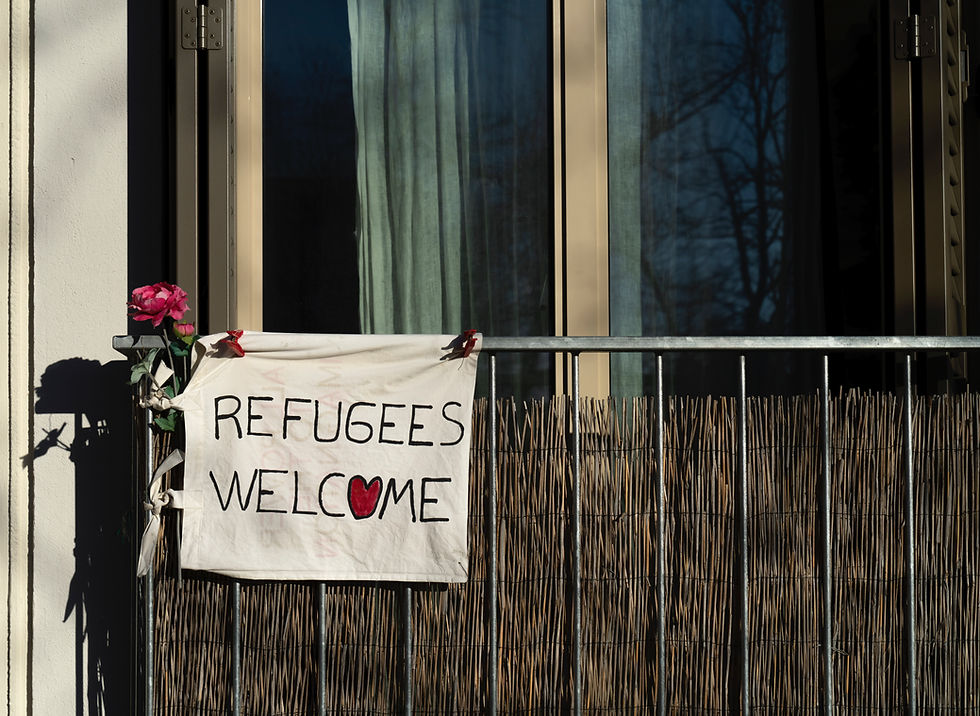
One important advocate in our neighborhood is the Northwest Regional Refugee and Immigrant Network (NWRRIN), an interfaith group founded in August 2024 by Judith Bernstein-Baker, a pro bono immigration attorney. NWRRIN is comprised of individuals and congregations concerned about current federal policies and ICE enforcement actions that have dramatically increased deportations, detentions, family separations, and withdrawal of legal status from millions of refugees and immigrants. In addition to advocacy, NWRRIN connects volunteers to support new residents in need of services such as affordable housing and employment.
At a public forum titled Immigrants Under Siege held on October 26th at the First United Methodist Church of Germantown, four of us from Holy Cross joined 196 others to hear national and local experts and representatives of local immigrant communities discuss how we can protect our neighbors. Twelve percent of the Philadelphia population are immigrants. A key need is legal access. In cases where there was legal counsel, the chances of success in immigration court, especially for those in detention, increased from 3% to 46%, but there are not enough immigration lawyers, and the cases are increasing! People are being detained in huge numbers, and cases can drag on for years. Pennsylvania has higher arrests than the national average.
Too many of our neighbors end up in detention centers with no legal access. “The Moshannon Valley Processing Center, with capacity for 1,900 detainees, is marked by violence, desperation, and little oversight…. According to ICE data, only about 20% of people booked into Moshannon this year have been convicted of serious crimes. Roughly 60% had either pending cases or no criminal convictions at all.” (Max Marin, Samantha Melamed, and Michelle Myers, The Philadelphia Inquirer, 9/21/25)
Community organizations represented at the forum shared the ways they provide support including making sure people know their rights, accompanying people to court, offering mental health services, after school programs, and food at various locations. See more information here.
“Pope Leo XIV has urged the world not to remain passive in the face of human suffering, particularly as it relates to the ongoing migrant and refugee crisis. He warned against what he described as the “globalization of powerlessness”—an attitude that spreads when we grow indifferent to the suffering of others and believe that nothing can be done to help.” (Salvatore Cernuzio, Vatican News, 10/2/25)
Comments on this column may be directed to the Social Justice Committee at socialjustice@holycrossphl.org. Click here for column archive.


Comments